Armed with a Phd in Neuroscience and plenty of personal experience, we're exploring health, well-being & the science of spirituality.
Beyond What You Ever Thought Was Possible!


Personal note lorem ipsum dolor sit amet, consectetur adipiscing elit. Pellentesque pretium id interdum mauris pharetra aliquet. Sed proin tellus donec tincidunt est convallis ipsum pharet.


October 20, 2026
What happens when the man behind some of television’s biggest sitcoms is secretly battling addiction, low self-esteem, and a lifelong need to prove he’s special? In this episode of Mayim Bialik's Breakdown, Chuck Lorre opens up like never before about the personal demons, painful experiences, and unexpected turning points behind his extraordinary career. From his childhood struggles with alcohol and a mother consumed by rage to spending a decade in Scientology, Lorre reveals the darker side of a life spent creating some of the most beloved shows in television history. He discusses how he found sobriety while filming Dharma & Greg, why his alcoholism escalated despite professional success, and how tying his self-worth to his work and humor affected his relationships. He also opens up about his complicated relationship with Charlie Sheen, why he failed to recognize the full extent of Sheen’s struggles while filming Two and a Half Men, why The Big Bang Theory became his safe space amid the chaos, and how the two eventually reconciled. Chuck Lorre also reveals: - The psychological paradox that shaped his life: living with low self-esteem while simultaneously believing he was special, and how that contradiction influenced his relationships, ambitions, and career - How music saved his life: learning guitar as a child, finding direction through music, and discovering a path away from the future he feared - How the creator of The Big Bang Theory and Two and a Half Men broke into television: his journey from music to writing for animated series and eventually creating some of the most successful primetime sitcoms ever - The unexpected story behind the iconic Teenage Mutant Ninja Turtles theme song: how he wrote it and why he believes it remains so popular decades later - The moment he learned to trust his comedy instincts & the breakthrough that helped define his unique approach to sitcom writing - His brilliant philosophy on comedy writing: his unconventional perspective on crafting sitcoms, finding the funny, and creating characters audiences never forget - What it was really like working on Roseanne, navigating a production led by a powerful, complicated female star and the difficult lessons he learned about show business - His lifelong comedy inspirations: the performers, writers, and influences that shaped his comedic sensibilities - Personal cost of turning humor into an identity: how his work became intertwined with his self-worth and affected his closest relationships - Being diagnosed with colitis: his experience navigating a significant health challenge while building an extraordinary career. - Behind the scenes of The Big Bang Theory: Chuck Lorre shares his thoughts on iconic moments featuring Mayim, including the unforgettable tiara scene and Sheldon’s spanking scene - The next chapter of the Big Bang Theory universe: how Stuart Fails to Save the Universe came about and what inspired the project - Lessons that only decades in Hollywood can teach you — the difficult truths he discovered about success, creativity, relationships, and the entertainment industry From writing one of the most recognizable cartoon theme songs of all time to building a television empire with The Big Bang Theory, Two and a Half Men, and Young Sheldon, Chuck Lorre’s journey is a remarkable story of ambition, creativity, addiction, recovery, and self-discovery. How does someone who creates laughter for millions learn to live with his own pain? And what happens when professional success can no longer silence the struggles within? This is Chuck Lorre beyond the sitcoms: unfiltered, introspective, and full of hard-won wisdom about comedy, addiction, Hollywood, and what it means to finally understand yourself. If you love behind-the-scenes Hollywood stories, the real stories behind legendary television shows, and deeply honest conversations with the creative minds who shaped pop culture, this is an interview you won’t want to miss.

What if you could experience someone else’s death…without being the one who was dying? For centuries, people across cultures have reported something far stranger than a traditional near death experience: shared death experiences (SDEs). Healthy, conscious people (including doctors, nurses, family members, and even people thousands of miles away) have described witnessing or experiencing phenomena seemingly connected to someone in the process of dying. But how is that possible? Some witnesses report seeing hovering apparitions, mysterious lights, mist, sounds, or even figures seemingly guiding the dying person into another realm. In some cases, multiple people in the same room claim to witness the same phenomenon. Are these experiences hallucinations? A psychological response to grief? Something science hasn't yet explained? Or could they point to something much deeper about consciousness, death, and what happens when we die? And then there are the experiences that happen after death. People who report after-death communication experiences sometimes say they have perceived a deceased loved one as being healthy, peaceful, and fully present in what feels like a new environment. Others report receiving a specific message, sign, or unmistakable sense that their loved one is still somehow connected to them. For those who experience them, these encounters can be profoundly comforting, sometimes helping people process grief, accept the death of someone they love, and completely rethink their understanding of the afterlife and what happens to consciousness after death. But are these simply experiences created by the grieving mind—or could they represent something more? We'll also revisit near-death experiencers and NDE researchers previously featured on the podcast to hear their perspectives on shared death experiences and what these accounts might tell us about consciousness, death, and the possibility of an existence beyond this life. In this episode of Mayim Bialik's Breakdown, we explore the fascinating and controversial world of shared death experiences and ask questions that challenge the way we think about death, and perhaps even life itself.You don't have to be the one dying to experience death!

October 14, 2026
What if telepathy, precognition, remote viewing, psychic abilities, and even “magic” are real, but science has been looking at them the wrong way? Could human consciousness actually be connected across space and time? Could your brain and body be responding to information from the future without you consciously knowing it? In this episode of Mayim Bialik's Breakdown, Dr. Dean Radin, Chief Scientist at the Institute of Noetic Sciences (IONS) & Cofounder of neuroengineering company Cognigenics, explores some of the biggest questions at the intersection of consciousness, quantum physics, parapsychology, psychic phenomena, telepathy, precognition, remote viewing, and the nature of reality. Dr. Radin explains what Noetic science actually is and why decades of research into “paranormal” phenomena continue to challenge conventional scientific assumptions. He explores evidence suggesting that human consciousness may influence quantum reality and whether the relationship between mind and matter could help explain phenomena like prayer. Why can’t psychics use their abilities to win the lottery? If precognition exists, is the future actually fixed, or are we simply sensing probabilities? And when you have a powerful intuition or premonition, are you predicting the future, or accidentally manifesting your own fears? We also dive into the mystery of telepathy, tracing the history of scientific telepathy experiments and how researchers have attempted to test them over the years. What blocks psychic intuition in the first place? Could constant stimulation, distraction, technology, and the noise of the outside world be preventing us from accessing subtle information? Are humans already responding physiologically to “nonlocal” information without consciously realizing it? Dr. Radin also discusses why AI may be biased against conclusions that validate paranormal phenomena, and the strange history of how Western civilization went from believing in magic to rejecting it, a transformation sometimes described as the “disenchantment of the world.” From his perspective as a scientist, what would it take to make paranormal phenomena more scientifically acceptable to study? We examine one of the biggest problems in parapsychology: reproducibility. Why are paranormal laboratory results so difficult to replicate? Are the phenomena themselves variable, or are traditional scientific methods running into fundamental boundaries when applied to consciousness? We explore government research into remote viewing - including how Dr. Radin's interest in the paranormal was influenced by research connected to the U.S. government's Stargate program - and tackle one of the most controversial questions surrounding modern paranormal experiences: Why do certain people seem able to encounter or summon orbs or nonhuman intelligence (NHI), while others never experience anything at all? Dr. Radin shares his thoughts on people such as Chris Bledsoe, who have reported extraordinary encounters with orbs and NHI, and explores why fear may play a major role in determining who can or can't experience these phenomena. He also recounts a deeply personal childhood experience on Iroquois land, when he saw what appeared to be a thunderbird. Could that strange encounter have somehow foreshadowed his eventual career investigating consciousness and the paranormal? We unpack the Global Consciousness Project and its investigation into whether human consciousness may exhibit measurable connectivity on a global scale. Could this research provide clues about the deeper relationship between mind, matter, interconnectedness, and prayer? And perhaps the most futuristic question of all: Could we genetically engineer someone to become psychic? Could future biotechnology enhance sensitivity to psychic phenomena, or even suppress that sensitivity if it proves psychologically harmful? Ultimately, Dr. Radin asks us to reconsider one of the most fundamental assumptions of modern science: Is consciousness simply something produced by the brain, or is consciousness actually permeating the fabric of reality itself?

October 13, 2026
What if telepathy, precognition, remote viewing, psychic abilities, and even “magic” are real, but science has been looking at them the wrong way? Could human consciousness actually be connected across space and time? Could your brain and body be responding to information from the future without you consciously knowing it? In this episode of Mayim Bialik's Breakdown, Dr. Dean Radin, Chief Scientist at the Institute of Noetic Sciences (IONS) & Cofounder of neuroengineering company Cognigenics, explores some of the biggest questions at the intersection of consciousness, quantum physics, parapsychology, psychic phenomena, telepathy, precognition, remote viewing, and the nature of reality. Dr. Radin explains what Noetic science actually is and why decades of research into “paranormal” phenomena continue to challenge conventional scientific assumptions. He explores evidence suggesting that human consciousness may influence quantum reality and whether the relationship between mind and matter could help explain phenomena like prayer. Why can’t psychics use their abilities to win the lottery? If precognition exists, is the future actually fixed, or are we simply sensing probabilities? And when you have a powerful intuition or premonition, are you predicting the future, or accidentally manifesting your own fears? We also dive into the mystery of telepathy, tracing the history of scientific telepathy experiments and how researchers have attempted to test them over the years. What blocks psychic intuition in the first place? Could constant stimulation, distraction, technology, and the noise of the outside world be preventing us from accessing subtle information? Are humans already responding physiologically to “nonlocal” information without consciously realizing it? Dr. Radin also discusses why AI may be biased against conclusions that validate paranormal phenomena, and the strange history of how Western civilization went from believing in magic to rejecting it, a transformation sometimes described as the “disenchantment of the world.” From his perspective as a scientist, what would it take to make paranormal phenomena more scientifically acceptable to study? We examine one of the biggest problems in parapsychology: reproducibility. Why are paranormal laboratory results so difficult to replicate? Are the phenomena themselves variable, or are traditional scientific methods running into fundamental boundaries when applied to consciousness? We explore government research into remote viewing - including how Dr. Radin's interest in the paranormal was influenced by research connected to the U.S. government's Stargate program - and tackle one of the most controversial questions surrounding modern paranormal experiences: Why do certain people seem able to encounter or summon orbs or nonhuman intelligence (NHI), while others never experience anything at all? Dr. Radin shares his thoughts on people such as Chris Bledsoe, who have reported extraordinary encounters with orbs and NHI, and explores why fear may play a major role in determining who can or can't experience these phenomena. He also recounts a deeply personal childhood experience on Iroquois land, when he saw what appeared to be a thunderbird. Could that strange encounter have somehow foreshadowed his eventual career investigating consciousness and the paranormal? We unpack the Global Consciousness Project and its investigation into whether human consciousness may exhibit measurable connectivity on a global scale. Could this research provide clues about the deeper relationship between mind, matter, interconnectedness, and prayer? And perhaps the most futuristic question of all: Could we genetically engineer someone to become psychic? Could future biotechnology enhance sensitivity to psychic phenomena, or even suppress that sensitivity if it proves psychologically harmful? Ultimately, Dr. Radin asks us to reconsider one of the most fundamental assumptions of modern science: Is consciousness simply something produced by the brain, or is consciousness actually permeating the fabric of reality itself?
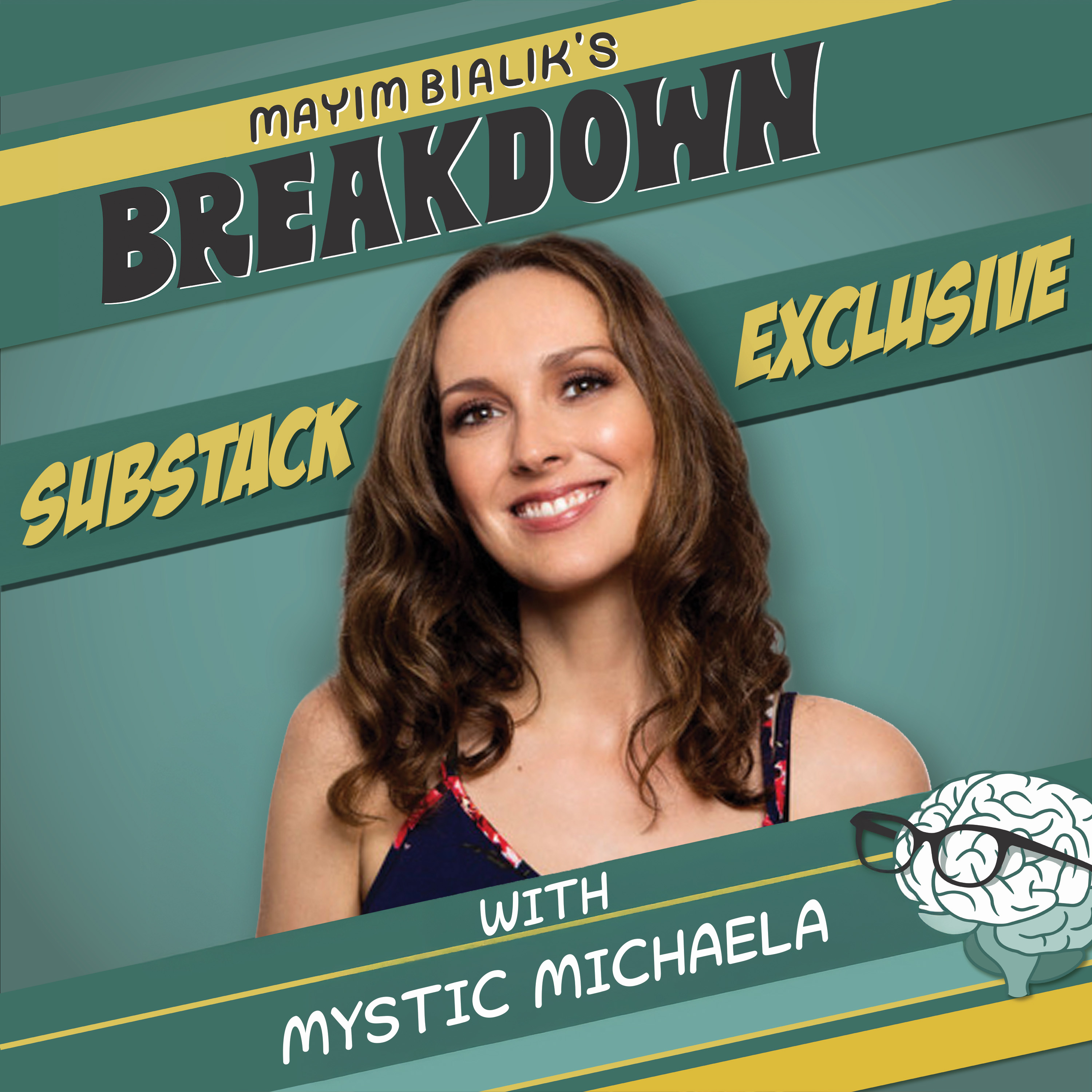
This week we’re sharing a chat Jonathan held on his Substack page, Practical Spirituality, with Mystic Michaela: author, podcast host, and fourth generation psychic medium who specializes in reading auras. When talking about energy, we explore the question: can you connect to someone’s energy when they aren’t in the room? Michaela says yes. Every version of you still exists, and you can send energy back to a past version of yourself and see that time differently. Nothing ever goes away. Energy is not only present but readable. What if we’re all mirrored systems giving off a frequency? Most people can’t read it the way Michaela does, but everyone is interacting with it whether they notice or not. We also talked about how to find your own form of intuition, how to use a pendulum, and what might be happening if you think you’re encountering a ghost. Spoiler: some of them stick around because they want to live with you.
October 9, 2026
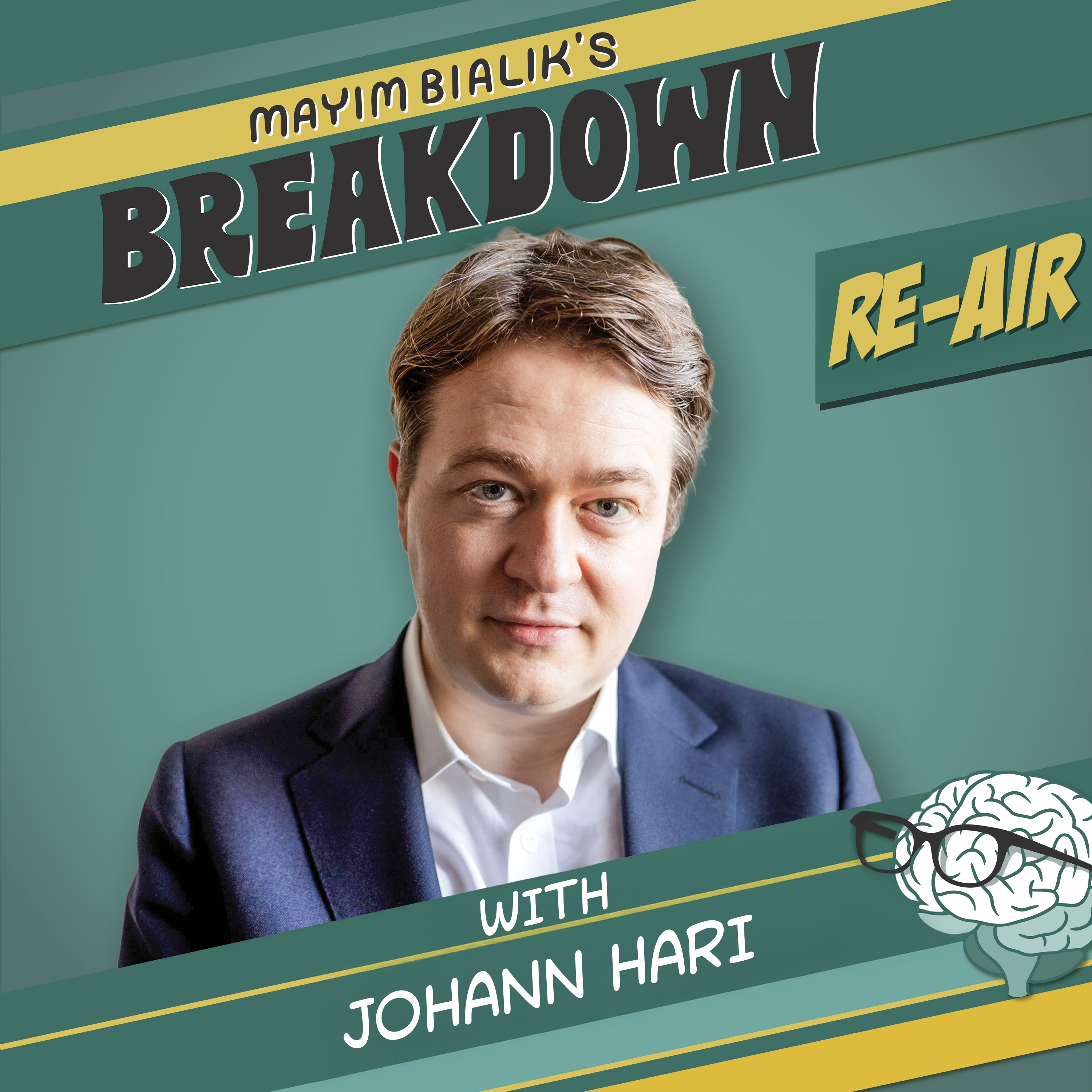
In honor of World Mental Health Day, we’re revisiting our second episode with New York Times best-selling author Johann Hari (Stolen Focus, Lost Connections, Chasing the Scream, Magic Pill). He gave us a powerful breakdown of the real causes behind depression, anxiety, and the global attention crisis. Is Big Pharma healing us or profiting from keeping us sick? Johann reveals why only two of the nine causes of depression are biological, exposing how Big Pharma, social media addiction, and modern lifestyle traps are fueling mental health issues. He dives into the rise of GLP-1 drugs (like Ozempic) and society’s toxic beauty obsession, while uncovering the overlooked role of sleep, community, and social connection in healing. Johann shares his personal experience with antidepressants, and explores how childhood shame and trauma drive addiction, weight gain, and despair. You’ll learn why even pets are being diagnosed with ADHD, what Silicon Valley insiders confessed about attention-hacking technology, and how our loss of focus is sabotaging relationships, careers, and democracy itself. If you’re ready to challenge the myths of mental health, regain your focus, and take back control of your mind, don’t miss this eye-opening conversation with Johann Hari.
October 20, 2026
What happens when the man behind some of television’s biggest sitcoms is secretly battling addiction, low self-esteem, and a lifelong need to prove he’s special? In this episode of Mayim Bialik's Breakdown, Chuck Lorre opens up like never before about the personal demons, painful experiences, and unexpected turning points behind his extraordinary career. From his childhood struggles with alcohol and a mother consumed by rage to spending a decade in Scientology, Lorre reveals the darker side of a life spent creating some of the most beloved shows in television history. He discusses how he found sobriety while filming Dharma & Greg, why his alcoholism escalated despite professional success, and how tying his self-worth to his work and humor affected his relationships. He also opens up about his complicated relationship with Charlie Sheen, why he failed to recognize the full extent of Sheen’s struggles while filming Two and a Half Men, why The Big Bang Theory became his safe space amid the chaos, and how the two eventually reconciled. Chuck Lorre also reveals: - The psychological paradox that shaped his life: living with low self-esteem while simultaneously believing he was special, and how that contradiction influenced his relationships, ambitions, and career - How music saved his life: learning guitar as a child, finding direction through music, and discovering a path away from the future he feared - How the creator of The Big Bang Theory and Two and a Half Men broke into television: his journey from music to writing for animated series and eventually creating some of the most successful primetime sitcoms ever - The unexpected story behind the iconic Teenage Mutant Ninja Turtles theme song: how he wrote it and why he believes it remains so popular decades later - The moment he learned to trust his comedy instincts & the breakthrough that helped define his unique approach to sitcom writing - His brilliant philosophy on comedy writing: his unconventional perspective on crafting sitcoms, finding the funny, and creating characters audiences never forget - What it was really like working on Roseanne, navigating a production led by a powerful, complicated female star and the difficult lessons he learned about show business - His lifelong comedy inspirations: the performers, writers, and influences that shaped his comedic sensibilities - Personal cost of turning humor into an identity: how his work became intertwined with his self-worth and affected his closest relationships - Being diagnosed with colitis: his experience navigating a significant health challenge while building an extraordinary career. - Behind the scenes of The Big Bang Theory: Chuck Lorre shares his thoughts on iconic moments featuring Mayim, including the unforgettable tiara scene and Sheldon’s spanking scene - The next chapter of the Big Bang Theory universe: how Stuart Fails to Save the Universe came about and what inspired the project - Lessons that only decades in Hollywood can teach you — the difficult truths he discovered about success, creativity, relationships, and the entertainment industry From writing one of the most recognizable cartoon theme songs of all time to building a television empire with The Big Bang Theory, Two and a Half Men, and Young Sheldon, Chuck Lorre’s journey is a remarkable story of ambition, creativity, addiction, recovery, and self-discovery. How does someone who creates laughter for millions learn to live with his own pain? And what happens when professional success can no longer silence the struggles within? This is Chuck Lorre beyond the sitcoms: unfiltered, introspective, and full of hard-won wisdom about comedy, addiction, Hollywood, and what it means to finally understand yourself. If you love behind-the-scenes Hollywood stories, the real stories behind legendary television shows, and deeply honest conversations with the creative minds who shaped pop culture, this is an interview you won’t want to miss.
What if you could experience someone else’s death…without being the one who was dying? For centuries, people across cultures have reported something far stranger than a traditional near death experience: shared death experiences (SDEs). Healthy, conscious people (including doctors, nurses, family members, and even people thousands of miles away) have described witnessing or experiencing phenomena seemingly connected to someone in the process of dying. But how is that possible? Some witnesses report seeing hovering apparitions, mysterious lights, mist, sounds, or even figures seemingly guiding the dying person into another realm. In some cases, multiple people in the same room claim to witness the same phenomenon. Are these experiences hallucinations? A psychological response to grief? Something science hasn't yet explained? Or could they point to something much deeper about consciousness, death, and what happens when we die? And then there are the experiences that happen after death. People who report after-death communication experiences sometimes say they have perceived a deceased loved one as being healthy, peaceful, and fully present in what feels like a new environment. Others report receiving a specific message, sign, or unmistakable sense that their loved one is still somehow connected to them. For those who experience them, these encounters can be profoundly comforting, sometimes helping people process grief, accept the death of someone they love, and completely rethink their understanding of the afterlife and what happens to consciousness after death. But are these simply experiences created by the grieving mind—or could they represent something more? We'll also revisit near-death experiencers and NDE researchers previously featured on the podcast to hear their perspectives on shared death experiences and what these accounts might tell us about consciousness, death, and the possibility of an existence beyond this life. In this episode of Mayim Bialik's Breakdown, we explore the fascinating and controversial world of shared death experiences and ask questions that challenge the way we think about death, and perhaps even life itself.You don't have to be the one dying to experience death!
October 14, 2026
What if telepathy, precognition, remote viewing, psychic abilities, and even “magic” are real, but science has been looking at them the wrong way? Could human consciousness actually be connected across space and time? Could your brain and body be responding to information from the future without you consciously knowing it? In this episode of Mayim Bialik's Breakdown, Dr. Dean Radin, Chief Scientist at the Institute of Noetic Sciences (IONS) & Cofounder of neuroengineering company Cognigenics, explores some of the biggest questions at the intersection of consciousness, quantum physics, parapsychology, psychic phenomena, telepathy, precognition, remote viewing, and the nature of reality. Dr. Radin explains what Noetic science actually is and why decades of research into “paranormal” phenomena continue to challenge conventional scientific assumptions. He explores evidence suggesting that human consciousness may influence quantum reality and whether the relationship between mind and matter could help explain phenomena like prayer. Why can’t psychics use their abilities to win the lottery? If precognition exists, is the future actually fixed, or are we simply sensing probabilities? And when you have a powerful intuition or premonition, are you predicting the future, or accidentally manifesting your own fears? We also dive into the mystery of telepathy, tracing the history of scientific telepathy experiments and how researchers have attempted to test them over the years. What blocks psychic intuition in the first place? Could constant stimulation, distraction, technology, and the noise of the outside world be preventing us from accessing subtle information? Are humans already responding physiologically to “nonlocal” information without consciously realizing it? Dr. Radin also discusses why AI may be biased against conclusions that validate paranormal phenomena, and the strange history of how Western civilization went from believing in magic to rejecting it, a transformation sometimes described as the “disenchantment of the world.” From his perspective as a scientist, what would it take to make paranormal phenomena more scientifically acceptable to study? We examine one of the biggest problems in parapsychology: reproducibility. Why are paranormal laboratory results so difficult to replicate? Are the phenomena themselves variable, or are traditional scientific methods running into fundamental boundaries when applied to consciousness? We explore government research into remote viewing - including how Dr. Radin's interest in the paranormal was influenced by research connected to the U.S. government's Stargate program - and tackle one of the most controversial questions surrounding modern paranormal experiences: Why do certain people seem able to encounter or summon orbs or nonhuman intelligence (NHI), while others never experience anything at all? Dr. Radin shares his thoughts on people such as Chris Bledsoe, who have reported extraordinary encounters with orbs and NHI, and explores why fear may play a major role in determining who can or can't experience these phenomena. He also recounts a deeply personal childhood experience on Iroquois land, when he saw what appeared to be a thunderbird. Could that strange encounter have somehow foreshadowed his eventual career investigating consciousness and the paranormal? We unpack the Global Consciousness Project and its investigation into whether human consciousness may exhibit measurable connectivity on a global scale. Could this research provide clues about the deeper relationship between mind, matter, interconnectedness, and prayer? And perhaps the most futuristic question of all: Could we genetically engineer someone to become psychic? Could future biotechnology enhance sensitivity to psychic phenomena, or even suppress that sensitivity if it proves psychologically harmful? Ultimately, Dr. Radin asks us to reconsider one of the most fundamental assumptions of modern science: Is consciousness simply something produced by the brain, or is consciousness actually permeating the fabric of reality itself?
October 13, 2026
What if telepathy, precognition, remote viewing, psychic abilities, and even “magic” are real, but science has been looking at them the wrong way? Could human consciousness actually be connected across space and time? Could your brain and body be responding to information from the future without you consciously knowing it? In this episode of Mayim Bialik's Breakdown, Dr. Dean Radin, Chief Scientist at the Institute of Noetic Sciences (IONS) & Cofounder of neuroengineering company Cognigenics, explores some of the biggest questions at the intersection of consciousness, quantum physics, parapsychology, psychic phenomena, telepathy, precognition, remote viewing, and the nature of reality. Dr. Radin explains what Noetic science actually is and why decades of research into “paranormal” phenomena continue to challenge conventional scientific assumptions. He explores evidence suggesting that human consciousness may influence quantum reality and whether the relationship between mind and matter could help explain phenomena like prayer. Why can’t psychics use their abilities to win the lottery? If precognition exists, is the future actually fixed, or are we simply sensing probabilities? And when you have a powerful intuition or premonition, are you predicting the future, or accidentally manifesting your own fears? We also dive into the mystery of telepathy, tracing the history of scientific telepathy experiments and how researchers have attempted to test them over the years. What blocks psychic intuition in the first place? Could constant stimulation, distraction, technology, and the noise of the outside world be preventing us from accessing subtle information? Are humans already responding physiologically to “nonlocal” information without consciously realizing it? Dr. Radin also discusses why AI may be biased against conclusions that validate paranormal phenomena, and the strange history of how Western civilization went from believing in magic to rejecting it, a transformation sometimes described as the “disenchantment of the world.” From his perspective as a scientist, what would it take to make paranormal phenomena more scientifically acceptable to study? We examine one of the biggest problems in parapsychology: reproducibility. Why are paranormal laboratory results so difficult to replicate? Are the phenomena themselves variable, or are traditional scientific methods running into fundamental boundaries when applied to consciousness? We explore government research into remote viewing - including how Dr. Radin's interest in the paranormal was influenced by research connected to the U.S. government's Stargate program - and tackle one of the most controversial questions surrounding modern paranormal experiences: Why do certain people seem able to encounter or summon orbs or nonhuman intelligence (NHI), while others never experience anything at all? Dr. Radin shares his thoughts on people such as Chris Bledsoe, who have reported extraordinary encounters with orbs and NHI, and explores why fear may play a major role in determining who can or can't experience these phenomena. He also recounts a deeply personal childhood experience on Iroquois land, when he saw what appeared to be a thunderbird. Could that strange encounter have somehow foreshadowed his eventual career investigating consciousness and the paranormal? We unpack the Global Consciousness Project and its investigation into whether human consciousness may exhibit measurable connectivity on a global scale. Could this research provide clues about the deeper relationship between mind, matter, interconnectedness, and prayer? And perhaps the most futuristic question of all: Could we genetically engineer someone to become psychic? Could future biotechnology enhance sensitivity to psychic phenomena, or even suppress that sensitivity if it proves psychologically harmful? Ultimately, Dr. Radin asks us to reconsider one of the most fundamental assumptions of modern science: Is consciousness simply something produced by the brain, or is consciousness actually permeating the fabric of reality itself?
This week we’re sharing a chat Jonathan held on his Substack page, Practical Spirituality, with Mystic Michaela: author, podcast host, and fourth generation psychic medium who specializes in reading auras. When talking about energy, we explore the question: can you connect to someone’s energy when they aren’t in the room? Michaela says yes. Every version of you still exists, and you can send energy back to a past version of yourself and see that time differently. Nothing ever goes away. Energy is not only present but readable. What if we’re all mirrored systems giving off a frequency? Most people can’t read it the way Michaela does, but everyone is interacting with it whether they notice or not. We also talked about how to find your own form of intuition, how to use a pendulum, and what might be happening if you think you’re encountering a ghost. Spoiler: some of them stick around because they want to live with you.
October 9, 2026
In honor of World Mental Health Day, we’re revisiting our second episode with New York Times best-selling author Johann Hari (Stolen Focus, Lost Connections, Chasing the Scream, Magic Pill). He gave us a powerful breakdown of the real causes behind depression, anxiety, and the global attention crisis. Is Big Pharma healing us or profiting from keeping us sick? Johann reveals why only two of the nine causes of depression are biological, exposing how Big Pharma, social media addiction, and modern lifestyle traps are fueling mental health issues. He dives into the rise of GLP-1 drugs (like Ozempic) and society’s toxic beauty obsession, while uncovering the overlooked role of sleep, community, and social connection in healing. Johann shares his personal experience with antidepressants, and explores how childhood shame and trauma drive addiction, weight gain, and despair. You’ll learn why even pets are being diagnosed with ADHD, what Silicon Valley insiders confessed about attention-hacking technology, and how our loss of focus is sabotaging relationships, careers, and democracy itself. If you’re ready to challenge the myths of mental health, regain your focus, and take back control of your mind, don’t miss this eye-opening conversation with Johann Hari.

Relationships, Sexuality, Family, Work, Stress - it all relates to mental health.